Introduction
A well-designed kitchen needs more than suitable cabinets, reliable appliances, and enough counter space. Ventilation also plays an important role in keeping the cooking area comfortable. When food is fried, grilled, sautéed, or simmered, the cooking process can release smoke, airborne grease, steam, odors, and other particles into the surrounding air. Without effective ventilation, these byproducts may linger in the kitchen, settle on nearby surfaces, or spread into adjoining rooms.
A range hood helps manage these cooking emissions by drawing air from above the cooktop and directing it through a filtration system. Depending on its design, the air may then be discharged outdoors or passed through additional filtration before returning to the room. The right setup depends on the kitchen layout, cooking habits, building requirements, and the type of ventilation system installed.
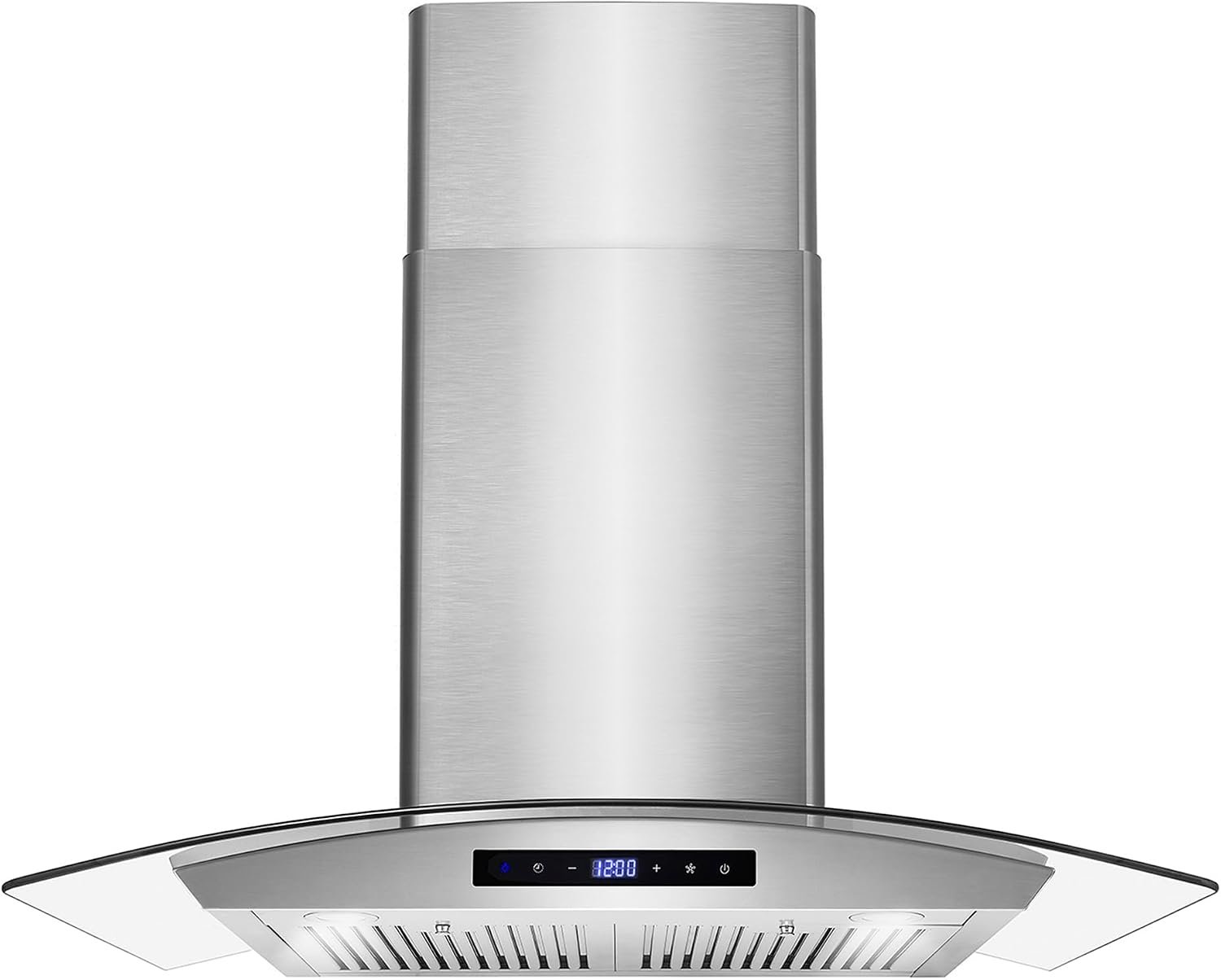
The 30-inch Vista Collection 380 CFM Ducted Wall Mount Range Hood with LED Lighting in Stainless Steel is designed for kitchens that use a wall-mounted ventilation arrangement. Its listed specifications identify a 30-inch width, a ducted ventilation configuration, a stated airflow capacity of 380 cubic feet per minute (CFM), LED lighting, and a stainless-steel finish.
These characteristics make it relevant to homeowners and renovators planning ventilation above a compatible cooking surface. A wall-mounted range hood can provide a defined ventilation area while contributing to the kitchen’s overall appearance. Its usefulness, however, depends on more than the specifications alone. Duct size, installation quality, hood placement, noise, maintenance requirements, and compatibility with the cooking appliance all influence the final result.
This guide explains the purpose of the Vista Collection range hood, how its main features relate to everyday cooking, what to consider before installation, and how ducted wall-mounted hoods compare with other ventilation categories. The goal is to provide practical information that helps readers assess whether this type of kitchen appliance fits their space and cooking routine.
Product-specific details should be confirmed against the current Amazon listing and the manufacturer’s installation documentation. Specifications, included accessories, filter arrangements, and installation requirements should not be assumed from the product title alone.
Understanding the 30-Inch Vista Collection Range Hood
A wall-mounted range hood is installed above a cooktop or range, typically against a kitchen wall. It collects rising cooking emissions and moves them through a ventilation system. Depending on the design, the hood may use filters to capture grease before the air travels through ductwork to an exterior outlet.
The Vista Collection model described here is a ducted wall-mounted range hood with a stated airflow capacity of 380 CFM. The 30-inch width is a key measurement because the hood needs to suit the cooking surface below it. LED lighting is another practical feature, providing illumination over the cooking area, while the stainless-steel finish offers a familiar appearance for many contemporary kitchens.
These features serve different purposes. The hood’s width relates to coverage, the airflow rating relates to air movement, the ducted configuration determines how captured air is handled, and the lighting helps users see the cooktop more clearly.
No single specification determines how well a range hood will perform in every kitchen. A suitable model must be considered alongside the cooktop’s dimensions, cooking intensity, ceiling height, duct route, and local installation requirements.
Key Features of the Vista Collection Range Hood
1. A 30-Inch Width for Compatible Cooking Areas
The 30-inch width is one of the first specifications to examine when planning a range hood installation. Hood width should be considered in relation to the dimensions of the cooktop or range, rather than selected solely according to cabinet width or visual preference.
A hood that is too narrow for the cooking surface may have difficulty capturing emissions that rise near the outer burners. A correctly sized hood helps establish an appropriate capture area above the cooking appliance, although actual performance also depends on mounting height, airflow, and the way air moves through the room.
A 30-inch model may be suitable for a kitchen with a compatible 30-inch cooking appliance, provided the installation instructions and local requirements support that arrangement. The exact dimensions should still be checked, since a product’s nominal width may not match every measurement needed for installation.
Before ordering, measure the available wall space and examine the cabinetry above the cooktop. Check the hood’s actual width, depth, height, and any required clearance from combustible materials or adjacent cabinets.
The cooking appliance’s installation manual should also be consulted. Different cooktops can have different clearance requirements, and a range hood must be installed at an appropriate height to balance capture performance, accessibility, and safety.
2. Ducted Ventilation
The Vista Collection model is identified as a ducted range hood. In a ducted system, air captured by the hood passes through the ventilation pathway and is discharged outside the building.
This differs from a recirculating system, which filters the air and returns it to the kitchen. Ducted ventilation can remove captured cooking emissions from the indoor environment rather than simply circulating the air through a filter and returning it to the room.
The ducted configuration is particularly relevant for households that regularly cook foods that generate smoke, strong aromas, or airborne grease. It can also be useful when several cooking methods are used throughout the week, from boiling and simmering to frying and searing.
However, the performance of a ducted hood depends heavily on the complete installation. Duct length, diameter, bends, transitions, exterior termination, and airflow restrictions can affect how much air the system actually moves.
A poorly designed duct route may reduce performance even when the hood has a substantial advertised airflow rating. For that reason, the manufacturer’s ducting specifications should be followed carefully.
Ducted installation may also require access to an exterior wall or roof, suitable ductwork, and permission to make changes to the building. These factors should be considered before choosing the appliance.
3. A Stated Airflow Capacity of 380 CFM
CFM stands for cubic feet per minute. It is a measurement of the volume of air a ventilation system is designed to move under specified conditions.
The 380 CFM figure in the product title provides a useful starting point for understanding the hood’s intended airflow capacity. It should not, however, be interpreted as a guarantee that the installed system will move exactly that volume of air in every kitchen.
Actual airflow can be affected by duct design, static pressure, installation quality, filter condition, and other restrictions. The manufacturer’s technical documentation should clarify the conditions under which the rating is specified, where that information is available.
Airflow requirements also depend on the cooking appliance and how it is used. Frequent high-heat cooking, searing, frying, and wok-style preparation can create different ventilation demands from occasional low-temperature cooking.
A 380 CFM rating may be relevant to certain residential cooking setups, but it is not automatically sufficient for every range or kitchen. Check the range hood manufacturer’s guidance and any applicable building or mechanical codes before making a decision.
It is also important to consider how the kitchen receives replacement air. Exhausting air from a building can affect indoor pressure, especially when other exhaust appliances are operating. In some installations, additional make-up air provisions may be required by local code or the overall ventilation design.
4. Stainless-Steel Finish
Stainless steel is widely used for kitchen appliances because it provides a clean, metallic appearance that can coordinate with a variety of cabinet colors and countertop materials.
A stainless-steel range hood may fit naturally into a contemporary kitchen, but it can also complement more traditional spaces when combined with suitable hardware, lighting, and cabinetry.
The finish can be practical for a kitchen appliance that needs regular cleaning. However, stainless steel is not maintenance-free. Fingerprints, grease, water marks, and dust may be visible, depending on the finish and lighting.
The appropriate cleaning method should be confirmed in the manufacturer’s care instructions. Using a soft cloth and a suitable cleaner intended for the appliance’s finish can help maintain its appearance. Abrasive pads or unsuitable chemicals may scratch or damage the surface.
The exterior should be cleaned as needed, particularly around areas exposed to cooking grease. Regular maintenance is easier when residue is removed before it accumulates into a heavier layer.
5. LED Cooktop Lighting
The product title identifies LED lighting as a feature of the range hood. Lighting positioned above a cooking surface can help illuminate ingredients, cookware, and the area around the burners.
Good task lighting is useful when checking whether food is browning evenly, monitoring a simmer, reading cooking instructions, or handling ingredients near a hot surface.
The effectiveness of the lighting depends on the placement of the light sources, their brightness, the shape of the hood, and the overall lighting in the kitchen. LED lighting can provide a focused source of illumination without requiring a separate fixture directly over the cooktop.
The exact light output, color temperature, replacement method, and control arrangement should be verified in the current product documentation. These details matter if a user prefers a particular lighting appearance or wants to understand how the fixture can be maintained.
It is also worth considering the rest of the kitchen lighting. Range hood lights are generally intended to supplement the room’s main lighting rather than replace all overhead illumination.
6. Wall-Mounted Installation
A wall-mounted hood is positioned against a wall above the cooking appliance. This arrangement can create a clear visual focal point while placing the ventilation intake directly above the cooking area.
It is often considered during kitchen renovations where the range sits against a wall and the duct route can be planned through that wall or through the ceiling.
Wall-mounted installation can provide a defined space for the hood, but the surrounding layout still matters. Cabinet height, backsplash material, ceiling height, duct routing, and access to electrical connections can influence whether the selected model is suitable.
Some wall-mounted hoods use a chimney-style cover to conceal ductwork, while other designs have different exterior configurations. The exact construction of this model should be confirmed through the listing and installation instructions rather than inferred from the general product category.
Before purchasing, check whether the necessary mounting hardware, duct adapter, chimney components, and other installation parts are included. Additional materials or professional labor may be needed, depending on the existing kitchen setup.
7. Filtration and Grease Management
Range hoods commonly use filters to capture airborne grease before it enters the ductwork. These filters help limit grease accumulation within the ventilation system and can contribute to more manageable maintenance.
The Amazon product title references permanent filters, but the exact filter material, construction, removal method, and cleaning instructions should be confirmed in the listing and product manual.
If the model uses reusable metal grease filters, regular cleaning is an important part of ownership. Grease can gradually build up during normal cooking, particularly when frying or preparing foods at high temperatures.
The cleaning schedule depends on cooking frequency and the type of food prepared. A household that cooks daily may need to clean filters more frequently than one that uses the range occasionally.
Filters should be reinstalled correctly after cleaning. A damaged, poorly fitted, or heavily clogged filter can affect the hood’s operation and should be addressed according to the manufacturer’s guidance.
Permanent or reusable filters should not be assumed to eliminate all maintenance. Exterior cleaning, inspection of the duct system when appropriate, and care of the fan and lighting components may also form part of long-term upkeep.
How the Vista Collection Range Hood Can Be Used
1. Everyday Home Cooking
For everyday meal preparation, a range hood can help manage the emissions produced by boiling, sautéing, roasting, and other common cooking methods.
When preparing a family dinner, for example, the hood may be used to draw away steam from simmering pots and some of the airborne grease generated by cooking on the stovetop.
Using the ventilation system during cooking can help prevent emissions from spreading as widely through the home. Starting the hood before cooking becomes intense and allowing it to run briefly afterward, in accordance with the manufacturer’s guidance, can help manage residual odors and airborne particles.
The actual benefit depends on the hood’s capture performance, the duct installation, and how it is operated. Ventilation should be treated as part of an overall kitchen air-quality strategy rather than a substitute for safe cooking practices or other appropriate ventilation.
2. Frying and Sautéing
Frying and sautéing can release airborne grease, heat, and food odors. These cooking methods may place greater demands on a range hood than activities that produce little smoke or grease.
A ducted hood is intended to capture air above the cooking surface and direct it through the exhaust system. Its effectiveness depends on the hood’s position relative to the cookware and the amount of airflow available.
For best results, use the hood as directed by the manufacturer and keep cookware positioned appropriately on the burners. Very large pans placed near the edge of the cooking surface may produce emissions outside the hood’s most effective capture area.
The hood’s fan setting should be selected according to the cooking conditions and available controls. If the cooking process generates substantial smoke, reduce the heat when safe to do so and follow appropriate kitchen fire-safety practices.
3. Managing Cooking Odors
Some foods release aromas that remain in the kitchen after the meal has been prepared. Ingredients such as onions, garlic, fish, and certain spices can create strong smells during cooking.
A ducted range hood can help remove some of the air carrying these odors from the room. The amount removed depends on the ventilation system’s performance and whether the emissions are captured before they spread beyond the cooking area.
A hood cannot guarantee that every odor will disappear immediately. Odors may linger on fabrics, curtains, upholstery, and other surfaces, particularly after prolonged cooking.
Regular use, appropriate cleaning, and suitable room ventilation can all contribute to managing persistent cooking smells. Cleaning the filters and nearby surfaces is also important because accumulated grease can retain odors over time.
4. Cooking in an Open-Plan Home
In an open-plan layout, the kitchen may share space with a dining or living area. This can make cooking emissions more noticeable because there are fewer physical barriers between the cooking surface and the rest of the home.
A wall-mounted ducted range hood can be part of a strategy to reduce the spread of smoke, grease, steam, and odors from the kitchen.
The hood’s position and capture area are particularly important in these layouts. Air currents from open windows, ceiling fans, heating systems, or nearby doors can influence how cooking emissions move.
The ventilation system should be designed and installed with the room’s overall airflow in mind. A range hood is not a guarantee that all cooking emissions will be captured, especially if the hood is undersized, mounted incorrectly, or operating with restrictive ductwork.
5. Supporting a Kitchen Renovation
A range hood may be selected during a kitchen renovation to coordinate with new cabinetry, a replacement range, or changes to the room’s layout.
The 30-inch nominal width gives renovators a starting point for evaluating compatibility with the intended cooking area. The stainless-steel finish may also suit a design that uses metallic appliance finishes.
Ventilation should be considered early in the renovation process. Planning duct routes before cabinets, backsplashes, and wall finishes are completed can reduce the need for later modifications.
Renovators should also check electrical requirements, mounting support, required clearances, exterior termination details, and whether the existing ductwork is compatible with the new hood.
A qualified installer can help assess whether the proposed setup meets the manufacturer’s specifications and applicable local requirements.
6. Improving Task Lighting Over the Cooktop
The LED lighting can be useful when the kitchen’s general lighting does not adequately illuminate the cooking surface.
Focused light can make it easier to monitor a saucepan, inspect food color, or work with ingredients near the burners. It can also help when the cook stands between the main ceiling light and the cooking surface, creating a shadow.
The lighting should be considered alongside the kitchen’s existing fixtures. Some kitchens may benefit from under-cabinet lighting or general overhead illumination in addition to the hood’s lights.
If the lighting becomes dim or stops functioning, consult the product manual for troubleshooting and replacement guidance. Electrical work should be handled safely, and power should be disconnected as instructed before any maintenance.
Who May Find This Range Hood Suitable?
Homeowners With a Wall-Mounted Cooking Area
The product may be relevant to homeowners whose cooktop or range sits against a wall and whose kitchen can accommodate a ducted exhaust system.
The 30-inch width should be checked against the actual cooking appliance and the available mounting space. Compatibility should never be assumed solely because the range is described as a standard width.
People Planning a Kitchen Remodel
A ducted wall-mounted hood may suit a renovation in which the ventilation route can be installed or updated as part of the project.
The stainless-steel finish and LED lighting may also be relevant to people looking for a coordinated appliance appearance and focused task lighting.
Renovators should evaluate duct routing, installation labor, electrical connections, and building requirements before finalizing the kitchen plan.
Households That Cook Regularly
People who cook several times a week may appreciate a ventilation system that can be used consistently to manage cooking emissions.
The practical value depends on the type of cooking performed, the hood’s capture performance, and whether the installed ductwork allows suitable airflow.
Households that frequently fry, sear, or prepare foods with strong aromas should pay particular attention to ventilation requirements rather than choosing a hood based on appearance alone.
People Who Prefer Ducted Exhaust
Some homeowners prefer a system that discharges captured air outdoors rather than returning it to the kitchen after filtration.
A ducted hood can be appropriate when the building layout supports exterior exhaust and the installation meets applicable requirements.
However, ducted systems require suitable ductwork and an exterior termination. If those elements cannot be installed, a compatible recirculating model may be more practical.
Homeowners Looking for Stainless-Steel Appliances
The stainless-steel finish may coordinate with other kitchen appliances and fixtures. It can contribute to a consistent design, particularly when paired with similar finishes on ranges, refrigerators, or cabinet hardware.
Appearance should still be balanced against functional requirements. A visually coordinated hood may not be suitable if its airflow capacity, dimensions, or installation requirements do not match the cooking setup.
Important Things to Consider Before Choosing
1. Confirm the Actual Dimensions
A nominal 30-inch width does not provide every measurement required for installation. The hood’s depth, height, mounting points, chimney dimensions if applicable, and required clearances should also be checked.
Measure the space above the cooktop and compare it with the product’s dimensional drawing. Check the location of cabinets, shelves, windows, and other nearby structures.
The hood should be compatible with the cooking appliance and installed at the height specified by the manufacturer. A mounting position that is too high may reduce capture effectiveness, while an incorrect or excessively low position may create safety and usability concerns.
2. Evaluate Whether 380 CFM Meets Your Needs
The stated airflow capacity is an important specification, but it should be assessed in context.
The ventilation needs of a kitchen depend on the type and size of the cooking appliance, cooking habits, room layout, and local requirements. Some cooking setups may need more airflow than others.
Consult the range hood documentation and the cooking appliance’s instructions. If the kitchen includes a high-output gas range or frequent high-heat cooking, consider whether the specified airflow is appropriate for that installation.
Avoid assuming that a CFM number alone predicts the complete performance of a hood. Capture area, installation height, duct resistance, and how the fan is operated also matter.
3. Plan the Duct Route
Ducted ventilation requires a route from the hood to an exterior outlet. The path may run through a wall or ceiling, depending on the design of the building and the installation instructions.
Before ordering, determine whether a suitable route is available. Consider duct diameter, overall length, elbows, transitions, and the location of the exterior termination.
Excessive bends or undersized ductwork can restrict airflow. Flexible ducting, unsuitable adapters, or poorly sealed connections may also affect the system’s performance.
Follow the manufacturer’s specifications and applicable building codes. A qualified installer can help determine whether the proposed duct route is practical and compliant.
4. Understand Make-Up Air Requirements
When a range hood exhausts air outdoors, replacement air must enter the building to maintain an appropriate pressure balance.
In some homes, other exhaust appliances or a powerful ventilation system can contribute to negative pressure. Depending on the building, appliance type, and local code, additional make-up air provisions may be required.
This issue is particularly important when planning ventilation in a tightly sealed home or a kitchen with other fuel-burning appliances. Pressure imbalances can affect the operation of combustion appliances and may create safety concerns.
Consult local code requirements and a qualified professional where necessary. The appropriate solution depends on the complete building and ventilation system, not just the range hood.
5. Consider Noise Levels
Range hood noise can affect how comfortable the kitchen feels, particularly in open-plan homes where cooking and conversation take place in the same space.
Noise may vary by fan setting, installation quality, duct configuration, and the condition of filters or other components.
The product title does not provide a verified sound rating, so the exact noise level should be checked in the current listing or manufacturer’s documentation if this is an important consideration.
A correctly designed duct route and proper installation can help avoid unnecessary restrictions or vibration. However, all powered ventilation systems produce some sound, and noise expectations should be realistic.
6. Check Filter Type and Maintenance
The product title references permanent filters, but the exact design and care requirements should be confirmed.
Reusable filters may need periodic cleaning to remove accumulated grease. The appropriate frequency depends on cooking habits and the manufacturer’s guidance.
Before purchasing, check how the filters are removed, whether they are dishwasher-safe if applicable, and how they should be reinstalled. Do not assume that a filter can be cleaned in a particular way unless the manual confirms it.
A maintenance routine should also include cleaning accessible exterior surfaces and checking the hood for visible residue or unusual operation.
7. Review Electrical Requirements
Range hoods require an appropriate electrical connection for the fan and lighting. The product’s voltage, wiring method, plug configuration if any, and installation requirements should be confirmed in the manufacturer’s documentation.
Do not assume that the hood can be connected to every existing outlet or circuit. Electrical work should comply with local requirements and be performed by a qualified person where necessary.
Before installation or maintenance, follow the manufacturer’s instructions for safely disconnecting power.
8. Assess the Exterior Exhaust Location
The exterior outlet should be located and installed according to the manufacturer’s requirements and applicable codes. Its position can affect the practicality of the duct route and the way exhaust air is discharged.
The installation should avoid inappropriate discharge locations and should use a suitable exterior termination. Backdraft prevention and weather protection may also be relevant, depending on the system design.
The exact termination requirements should be taken from the installation manual rather than assumed from the general category of wall-mounted range hoods.
9. Consider the Cost and Scope of Installation
The purchase price is only one part of planning a ducted range hood. The total project may also involve ductwork, exterior venting, electrical work, cabinet adjustments, wall repairs, or professional installation.
The amount of additional work depends on whether the kitchen already has compatible ducting and an appropriate electrical connection.
For a replacement installation, check whether the existing duct size and route match the new hood’s requirements. For a new installation, obtain a clear understanding of the work required before finalizing the appliance choice.
10. Verify the Exact Product Listing
Amazon listings and product variations can change. Before ordering, confirm the model name, nominal width, airflow rating, lighting features, filter type, finish, included components, and warranty information where available.
Check the current installation manual if it is accessible, particularly if the kitchen has unusual dimensions or constraints.
A listing title provides a useful overview, but it should not replace the manufacturer’s technical documentation when exact specifications matter.
Comparing General Categories of Kitchen Ventilation
Different ventilation designs are intended for different kitchen layouts. Understanding the main categories can help clarify whether a ducted wall-mounted hood is appropriate.
Ducted Wall-Mounted Range Hoods
Ducted wall-mounted hoods sit above a cooking appliance installed against a wall and exhaust captured air outdoors through ductwork.
They can be useful when the building layout supports exterior venting and the hood can be positioned correctly above the cooking surface.
Their main installation consideration is the duct route. A suitable exterior outlet, correctly sized ductwork, and appropriate mounting clearances are essential parts of the system.
The Vista Collection model falls into this general category based on the product title.
Recirculating Range Hoods
Recirculating hoods filter air and return it to the kitchen instead of exhausting it outdoors. Depending on the design, they may use grease filters and additional filters intended to reduce certain odors.
These systems can be practical when exterior ducting is unavailable or difficult to install. They may be particularly relevant in some apartments or renovation projects with limited access to exterior walls.
However, recirculating systems do not remove indoor air and discharge it outdoors in the same way as ducted systems. Their effectiveness depends on the filter type, maintenance, and the pollutants being addressed.
A recirculating model should not be assumed to provide identical performance to a ducted system.
Under-Cabinet Range Hoods
Under-cabinet hoods are mounted beneath a kitchen cabinet above the cooking surface. They may be ducted or recirculating, depending on the model.
This category can work well where the kitchen design includes a cabinet above the range and the hood is intended to fit within that space.
Compared with a wall-mounted chimney-style design, an under-cabinet hood may have a more integrated appearance. The right option depends on available space, ventilation requirements, and the kitchen’s overall layout.
Island Range Hoods
Island hoods are designed for cooktops positioned on a kitchen island rather than against a wall. They typically need to be mounted from the ceiling and are planned around an open cooking area.
Because there is no wall directly behind the cooktop, capture performance and installation design require particular attention. The duct route may also need to pass through the ceiling.
A wall-mounted model should not be treated as interchangeable with an island hood. The installation arrangement and mounting requirements are different.
Downdraft Ventilation
Downdraft systems draw air downward or toward a vent positioned near the cooking surface rather than using a conventional hood above it.
They may be considered in kitchens where an overhead hood is undesirable or difficult to accommodate. However, their suitability depends on the cooktop, cabinet design, duct route, and the type of cooking performed.
A downdraft system has different capture characteristics from an overhead hood, so the choice should be based on the kitchen’s actual ventilation needs rather than appearance alone.
Frequently Asked Questions
What is the 30-inch Vista Collection range hood?
It is a stainless-steel, wall-mounted ducted range hood described in the product title as having a 30-inch width, 380 CFM airflow capacity, and LED lighting.
The exact dimensions, controls, filter construction, and included accessories should be verified through the current Amazon listing and manufacturer’s documentation.
What does 380 CFM mean?
CFM stands for cubic feet per minute and describes a ventilation system’s airflow capacity under specified conditions.
The 380 CFM figure provides a starting point for evaluating the hood’s intended air movement. Actual installed airflow can differ depending on duct design, resistance, and other installation factors.
Does this range hood vent air outdoors?
The product title identifies the model as ducted. Ducted range hoods are designed to discharge captured air outdoors through an exhaust duct.
Confirm the required duct size, routing options, and exterior termination details in the installation manual before purchasing.
Is a 30-inch range hood suitable for every 30-inch cooktop?
Not automatically. The hood’s actual dimensions, mounting height, capture area, and the cooking appliance’s requirements all need to be considered.
Check the manufacturer’s instructions for the hood and cooktop, along with applicable local codes, before deciding whether the two appliances are compatible.
What are the benefits of LED lighting?
LED lighting can illuminate the cooktop and make it easier to monitor food while cooking. Its usefulness depends on the light output, placement, and the kitchen’s other lighting sources.
Check the manufacturer’s specifications for details about brightness, replacement, and maintenance.
What are permanent filters?
The term generally refers to filters designed to be cleaned and reused rather than routinely discarded. The exact filter type and care method for this model should be confirmed in the product documentation.
Reusable filters still require maintenance to remove accumulated grease and support normal operation.
Can this range hood be installed without ductwork?
The product title identifies the model as ducted, so it should be evaluated as an appliance intended for an exhaust duct installation.
Do not assume it can be converted to recirculating operation unless the manufacturer explicitly supports that configuration and provides the required components and instructions.
Is professional installation necessary?
The need for professional installation depends on the existing kitchen setup, the electrical connection, duct route, and local requirements.
Replacing an existing compatible hood may involve less work than installing a new duct route through a wall or roof. If the installation involves electrical changes, building modifications, or make-up air requirements, a qualified professional can help ensure that the work is appropriate and compliant.
How often should the filters be cleaned?
The appropriate schedule depends on cooking frequency, the type of food prepared, and the manufacturer’s maintenance guidance.
Households that frequently fry or cook with substantial grease may need to clean filters more often than households that cook lightly. Follow the product manual rather than relying on a universal schedule.
Does the stainless-steel finish require special care?
Stainless steel generally benefits from regular cleaning with a suitable non-abrasive product and a soft cloth. The exact method should follow the manufacturer’s instructions.
Avoid abrasive materials or unsuitable chemicals that may damage the finish.
What should be checked before ordering?
Confirm the width and other dimensions, airflow rating, duct requirements, mounting clearances, electrical specifications, filter design, lighting details, and included installation components.
Also consider the available duct route, exterior termination, installation requirements, and whether the hood suits the cooking appliance and local building rules.
Conclusion
The 30-inch Vista Collection 380 CFM Ducted Wall Mount Range Hood with LED Lighting in Stainless Steel is designed for kitchens that need an overhead ventilation system with a ducted exhaust arrangement. Its stated specifications provide a starting point for evaluating width, airflow capacity, lighting, and finish.
A ducted range hood can help manage smoke, airborne grease, steam, and cooking odors by capturing air above the cooktop and directing it outdoors. The stainless-steel exterior may coordinate with a range of kitchen styles, while LED lighting can provide useful illumination for everyday meal preparation.
The most important consideration is whether the hood matches the kitchen’s actual ventilation needs. Width, mounting height, duct diameter, duct length, installation quality, airflow requirements, noise, and maintenance all influence its suitability. The stated 380 CFM rating should be assessed alongside the cooking appliance and local requirements rather than treated as a universal measure of performance.
Before choosing this model, review the current Amazon listing and manufacturer’s documentation for exact dimensions, filter details, electrical requirements, mounting instructions, and included components. If ductwork or electrical connections need to be installed or modified, professional guidance may be appropriate.
For homeowners planning a compatible wall-mounted installation, this range hood may be worth considering as part of a broader kitchen ventilation plan.
You can check more details on Amazon here
Confirm the current specifications and installation requirements before making a decision, and choose a ventilation setup that suits the cooking appliance, the room, and the way the kitchen is used.
As an Amazon Associate, we earn from qualifying purchases.
Leave a Reply